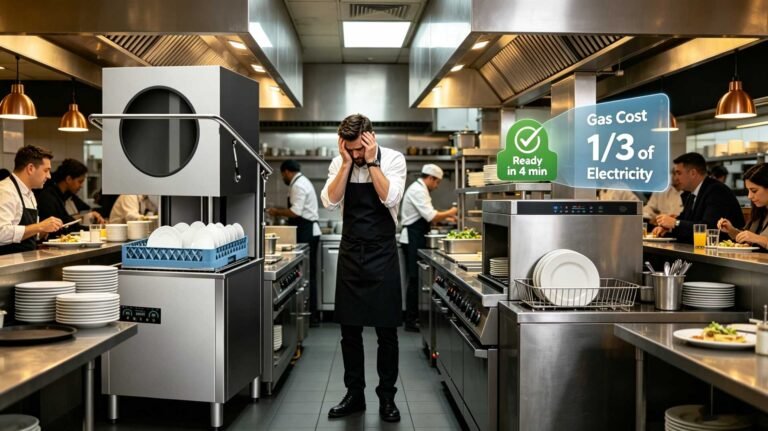
In the fast-paced hospitality industry, kitchen operational efficiency, hygiene compliance, and cost control are core pillars of service quality and profitability. For hotels and restaurants, dishwashing is no longer a trivial back-of-house task but a critical workflow that directly impacts customer experience, labor allocation, and sustainable operation. Traditional manual dishwashing and outdated cleaning equipment often lead to inconsistent sanitation results, excessive water and energy waste, high labor costs, and bottlenecks during peak dining hours. Modern industrial dishwashing systems, with their automated operation, precise sanitization, and resource-saving design, have become essential infrastructure for high-standard hospitality kitchens. This article explores real-world application case studies across different hotel and restaurant scenarios, analyzing practical challenges, system deployment solutions, and tangible operational benefits to provide actionable references for hospitality kitchen upgrading.
Core Advantages of Industrial Dishwashing Systems for Hospitality Businesses
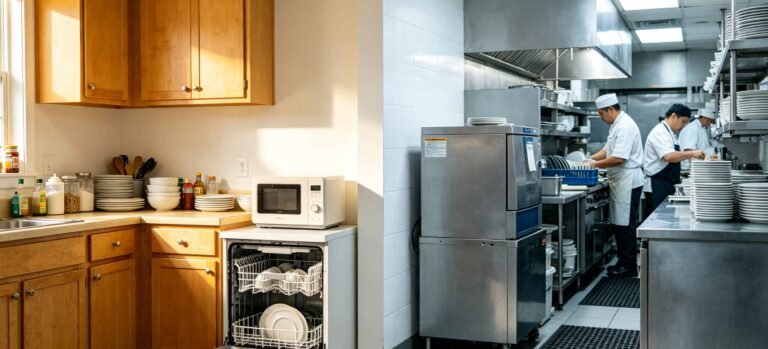
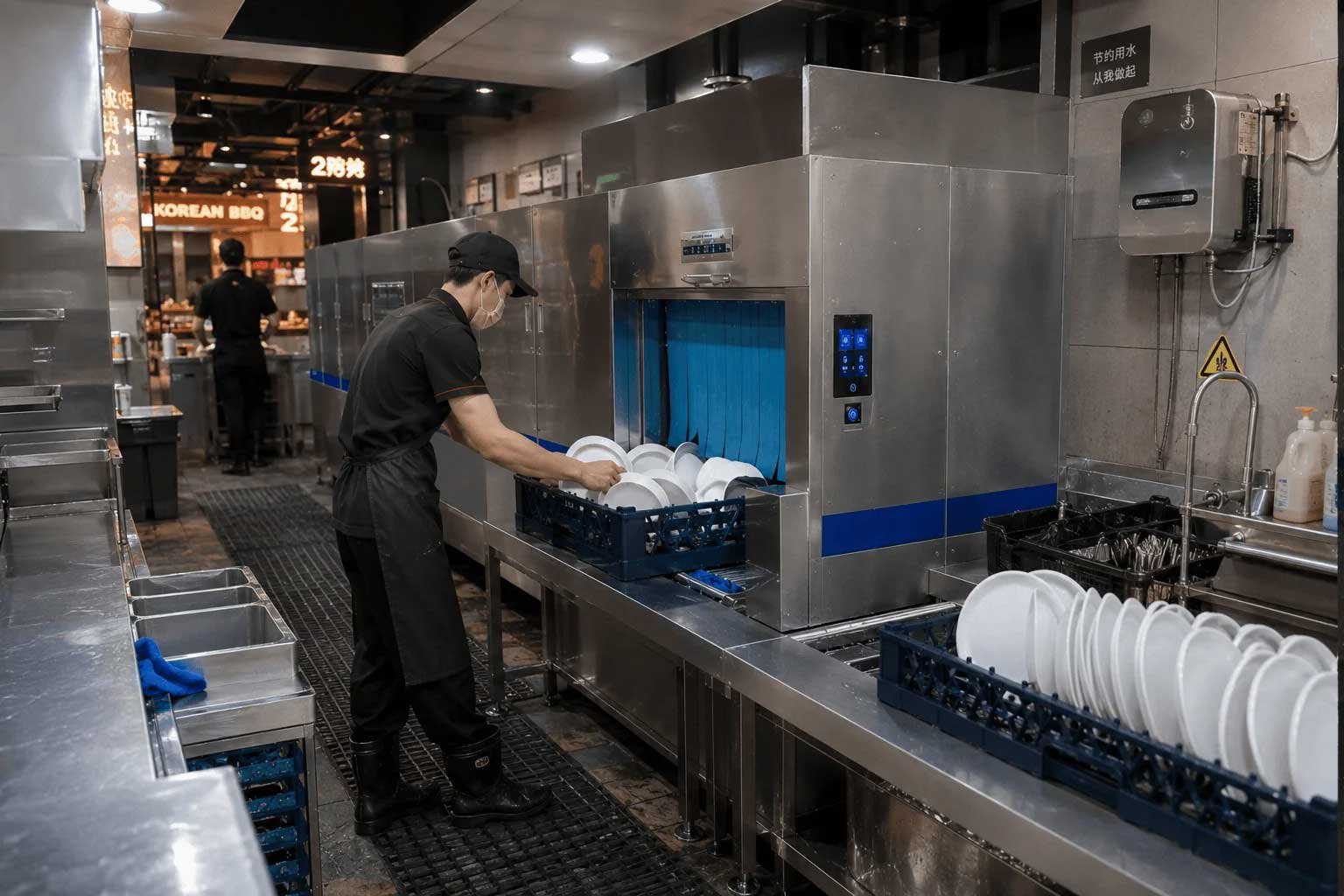
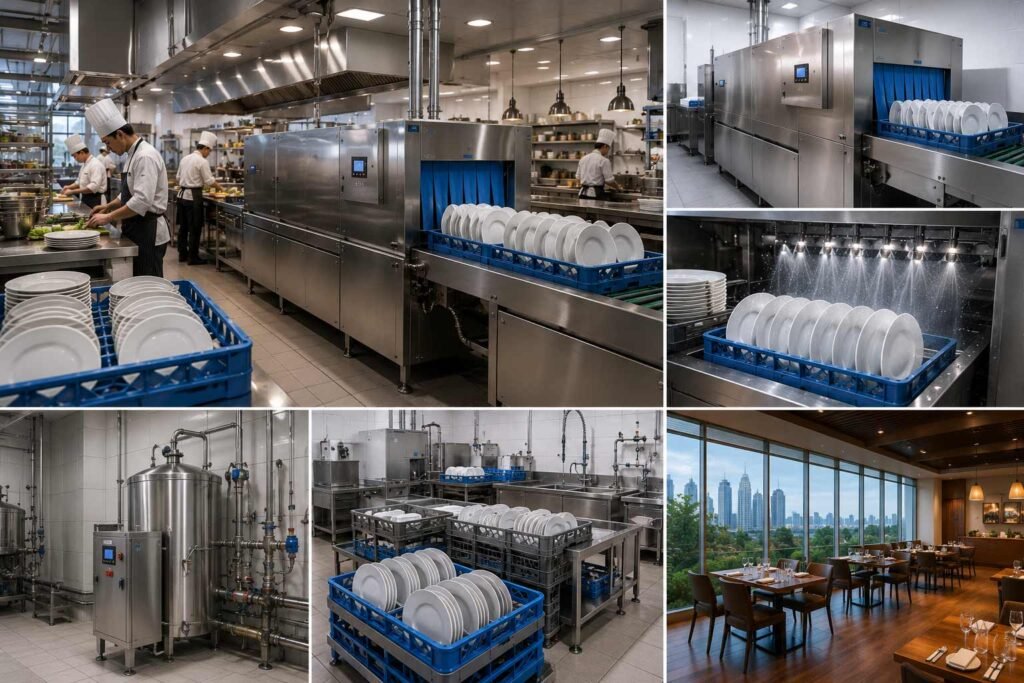
Before diving into practical case analyses, it is essential to clarify the inherent value of industrial dishwashing systems tailored for hotels and full-service restaurants. Unlike household or small commercial dishwashers, industrial-grade systems are engineered for high-volume, high-frequency, and high-standard cleaning scenarios. First, they deliver consistent hygiene performance, meeting global food safety standards such as HACCP through high-temperature circulating water and standardized disinfection cycles, eliminating the sanitation instability of manual cleaning. Second, they drastically reduce labor reliance and operational costs, cutting manual dishwashing time by 60%–74% and reducing overtime labor expenses by more than 60% for catering operations. Third, advanced industrial models optimize water, electricity, and heat consumption, helping hotels and restaurants achieve green operation and carbon reduction targets. Finally, customized models (rack-type, conveyor-type, under-counter, and pot-washing integrated systems) adapt to diverse kitchen spaces and business scales, from boutique hotel fine dining outlets to large-scale hotel banquet kitchens.
Real-World Case Study 1: High-Volume Banquet Kitchen Upgrade – Grand Hyatt Dubai
Grand Hyatt Dubai, a prestigious five-star luxury hotel, faces extreme dishwashing pressure from its diverse catering businesses. The hotel’s Market Café serves 250 daily guests, while the main banquet kitchen supports two large ballrooms, catering for over 2,000 guests during peak wedding and corporate event seasons. Before upgrading its dishwashing equipment, the hotel relied on two outdated rack transport dishwashers, which exposed prominent operational pain points. The old equipment had low cleaning efficiency, failing to keep up with the surge of tableware during peak banquets, resulting in stacked dirty tableware and delayed table turnover. Additionally, inconsistent water temperature and incomplete rinsing left water stains and residual food on tableware, undermining the hotel’s five-star service standard. The dual-equipment operation also consumed excessive water and electricity, with high daily maintenance costs and frequent equipment failures that disrupted kitchen workflows.
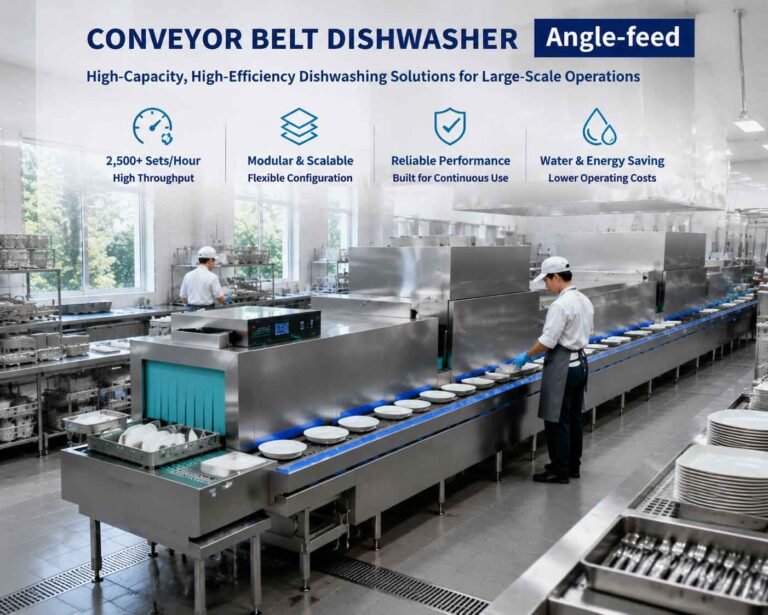
To solve these problems, Grand Hyatt Dubai adopted the MEIKO M-iQ intelligent industrial dishwashing system, marking the first deployment of this model in the UAE hospitality industry. The hotel deployed two sets of M-iQ systems, serving the Market Café and the main banquet kitchen respectively. The M-iQ system features intelligent circulating water filtration, constant high-temperature disinfection, and high-speed rack transmission technology, with a maximum processing capacity of 130 baskets per hour. Its integrated self-cleaning function reduces manual maintenance workload, while the modular design adapts to the hotel’s large kitchen space and high-volume cleaning demands.
After one year of operation, the hotel achieved remarkable operational improvements. The single M-iQ system completely replaced the function of two old dishwashers, saving kitchen space and simplifying equipment management. Tableware cleaning efficiency increased by 50%, completely eliminating tableware backlogs during peak banquet periods and improving restaurant table turnover rate by 18%. High-temperature constant cleaning ensures zero residual stains and bacteria on tableware, fully complying with international food safety standards and significantly enhancing customer dining experience. Meanwhile, the system’s water and energy-saving design reduced the hotel’s daily water and electricity consumption for dishwashing by 35%, lowering long-term operational costs while supporting the hotel’s sustainable development goals.
Real-World Case Study 2: Boutique Hotel Full-Scene Hygiene Optimization – The Merchant Hotel UK
The Merchant Hotel, a high-end boutique hotel in the UK, positions itself for premium customized dining and bar services, with extremely strict requirements for tableware cleanliness and appearance. Different from large resort hotels, this boutique hotel has scattered catering scenarios, including a main fine dining kitchen, multiple private club dining rooms, and lobby bars. Previously, the hotel adopted a unified small-scale dishwashing equipment solution, which failed to match the differentiated cleaning needs of different scenarios. The main kitchen’s high-volume tableware cleaning was inefficient, while bar glassware often had water stains and fog after cleaning, affecting the premium visual presentation of wine and beverage service. Moreover, scattered equipment led to high maintenance costs and inconsistent sanitation standards across outlets.
The hotel finally adopted a differentiated Winterhalter industrial dishwashing system solution based on scenario classification. For the high-volume main kitchen, it installed a high-capacity multi-tank MTR 2 conveyor-type dishwashing system to handle daily large-scale cleaning of plates, bowls, and cooking utensils. For small-space bars and private dining rooms, it deployed compact under-counter UC professional glass washers and dishwashers, realizing targeted cleaning of fine glassware and small tableware. All systems are equipped with precise temperature control and soft water filtration modules to avoid water stains and residue on high-end tableware and glassware.
The customized solution achieved full-scene hygiene standard unification for the boutique hotel. Fine glassware cleaning qualification rate reached 100%, completely solving the fog and water stain problem that plagued bar service for years. The hierarchical equipment layout optimized kitchen space utilization, avoiding the waste of large equipment in small scenarios. Meanwhile, centralized equipment maintenance management reduced daily maintenance time by 40%. As the hotel’s catering operations director commented, the matched industrial dishwashing system fully matches the hotel’s high-end service positioning, providing solid hygiene support for its discerning customer base and helping maintain a 5-star dining reputation.
Real-World Case Study 3: Cost Reduction Transformation for Medium-Sized Urban Restaurants
Different from high-star hotels, medium-sized urban full-service restaurants focus more on cost control and operational flexibility while ensuring basic hygiene standards. A typical Mediterranean grill restaurant in downtown Chicago, serving over 200 meals during weekend peak hours, faced severe labor and efficiency dilemmas before equipment upgrading. The restaurant relied entirely on manual dishwashing, requiring three full-time staff to be responsible for cleaning plates, pots, and pans every night. Long-hour manual labor led to high labor costs, and staff turnover further increased operational instability. During peak dining periods, dirty tableware accumulated in large quantities, resulting in insufficient clean tableware and restricting the restaurant’s service capacity and customer reception volume. In addition, manual cleaning had unstable disinfection effects, posing potential food safety risks.
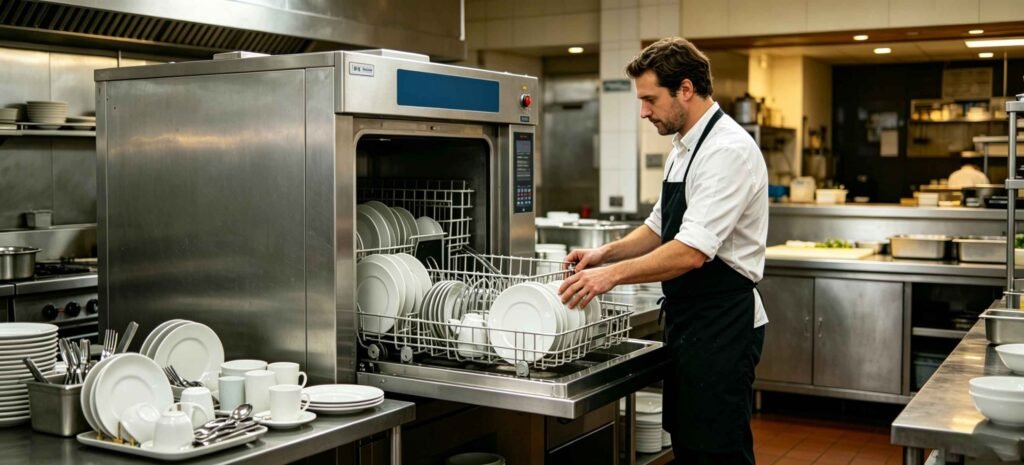
To address these pain points, the restaurant installed an integrated countertop industrial dishwashing system suitable for small and medium-sized kitchens. The equipment features compact footprint, flexible loading design, and multi-functional cleaning modes, which can simultaneously clean tableware and small cooking utensils such as pots and pans. The fully automated one-key operation reduces professional operation requirements, and the high-speed cleaning cycle adapts to the restaurant’s intermittent peak dining characteristics.
The transformation brought transformative cost and efficiency improvements to the restaurant. The automated system reduced dishwashing labor from three full-time staff to one part-time staff, cutting daily labor working hours by 10 hours and reducing annual labor costs by nearly 40%. The efficient cleaning cycle eliminated tableware backlogs during peak hours, increasing the restaurant’s weekend customer reception capacity by 25%. Standardized high-temperature disinfection also completely eliminated manual sanitation loopholes, helping the restaurant pass regular food safety inspections stably and avoid penalty risks caused by unqualified tableware hygiene. In addition, the equipment’s centralized water recycling design reduced daily water consumption by 45%, further lowering daily operational costs.
Key Insights and Industry Implementation Guidelines
Synthesizing the above real-world cases of hotels and restaurants of different scales and positioning, the application value and deployment rules of industrial dishwashing systems in the hospitality industry can be summarized. First, scenario-based customized selection is the core of successful deployment. Large-scale resort hotels and banquet-oriented kitchens are suitable for high-capacity conveyor-type and rack-type industrial dishwashing systems to meet high-volume and high-efficiency cleaning needs. Boutique hotels and multi-scene catering outlets need hierarchical matching of large main kitchen equipment and compact terminal equipment to balance efficiency and space utilization. Small and medium-sized urban restaurants prioritize integrated and flexible models to reduce labor costs and save kitchen space.
Second, industrial dishwashing systems bring compound benefits beyond efficiency improvement. In addition to solving tableware backlog and sanitation instability problems, they realize significant labor cost reduction, resource conservation, and green operation upgrading. For high-star hotels, standardized intelligent dishwashing systems help maintain high-end service standards and brand reputation; for civilian restaurants, they become a key tool to reduce operating costs and improve market competitiveness.
Third, intelligent and energy-saving upgrading is the inevitable trend of hospitality kitchen development. Modern industrial dishwashing systems with intelligent monitoring, automatic water filtration, and low-energy consumption design can further reduce maintenance costs and carbon emissions, helping catering businesses meet increasingly stringent food safety and environmental protection standards.
Conclusion
Industrial dishwashing systems have evolved from a simple cleaning tool to a core operational system that integrates hygiene guarantee, efficiency improvement, cost reduction, and sustainable operation for hotels and restaurants. The real-world case studies of luxury hotels, boutique hotels, and urban medium-sized restaurants fully verify that targeted industrial dishwashing system upgrading can solve the common pain points of traditional catering kitchen operations. In the increasingly competitive hospitality market, standardized, intelligent, and energy-efficient industrial dishwashing solutions will become the standard configuration for high-quality catering operations, helping hotels and restaurants achieve balanced improvement in service quality, operational efficiency, and economic benefits.