Many restaurant owners, hotel operators, and commercial kitchen managers focus only on price when purchasing a commercial dishwasher. However, choosing the wrong machine can lead to poor cleaning performance, high utility bills, frequent maintenance issues, and reduced kitchen efficiency.
In this guide, we’ll walk you through the 5 most common mistakes buyers make when choosing a commercial dishwasher — and how to avoid them.
1. Focusing Only on Price Instead of Long-Term Operating Costs
One of the biggest mistakes buyers make is choosing the cheapest machine available.
While low-cost commercial dishwashers may seem attractive at first, they often come with hidden long-term costs such as:
- Higher water consumption
- Increased electricity usage
- Poor cleaning efficiency
- Frequent breakdowns
- Expensive maintenance
A machine that saves money upfront may actually cost much more over time through repairs, utility bills, and operational downtime.
What You Should Consider Instead
Before buying, pay attention to:
- Washing capacity per hour
- Water and power consumption
- Heating performance
- Stainless steel material quality
- Brand reliability
- After-sales support
A high-quality commercial dishwasher should help reduce labor costs, save energy, and provide stable daily performance.
2. Choosing the Wrong Dishwasher Size for Your Business
Another common problem is selecting the wrong machine type for the kitchen’s actual workload.
For example:
- Small restaurants buying oversized conveyor dishwashers
- Large cafeterias using small hood-type machines
Both situations can create inefficiency and unnecessary operating costs.
Recommended Dishwasher Types
Small Restaurants & Cafés
A hood-type commercial dishwasher is usually the best choice for limited space and moderate dishwashing demand.
Chain Restaurants
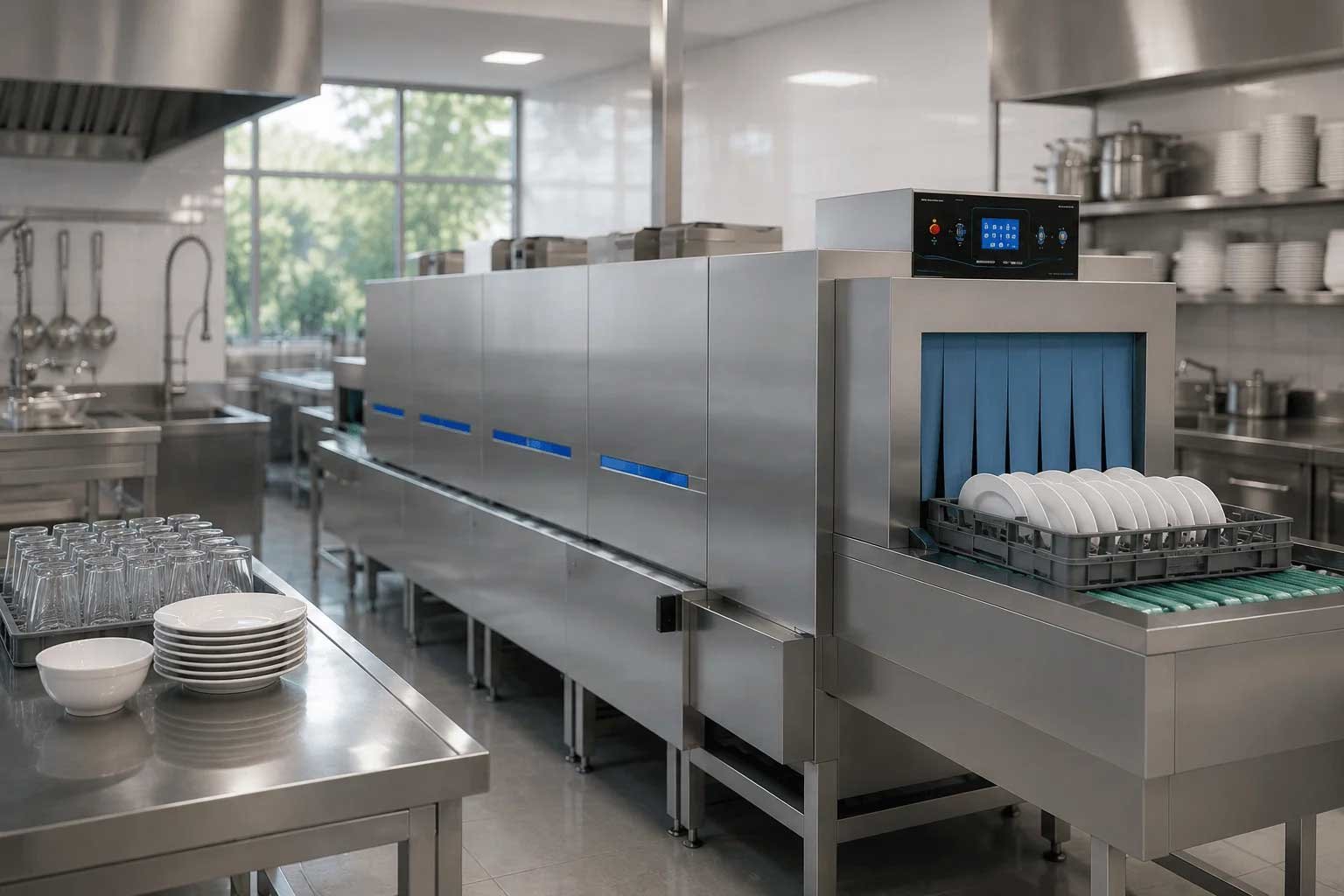
Rack conveyor dishwashers are ideal for medium-to-high volume operations with faster washing requirements.
Hotels & School Cafeterias
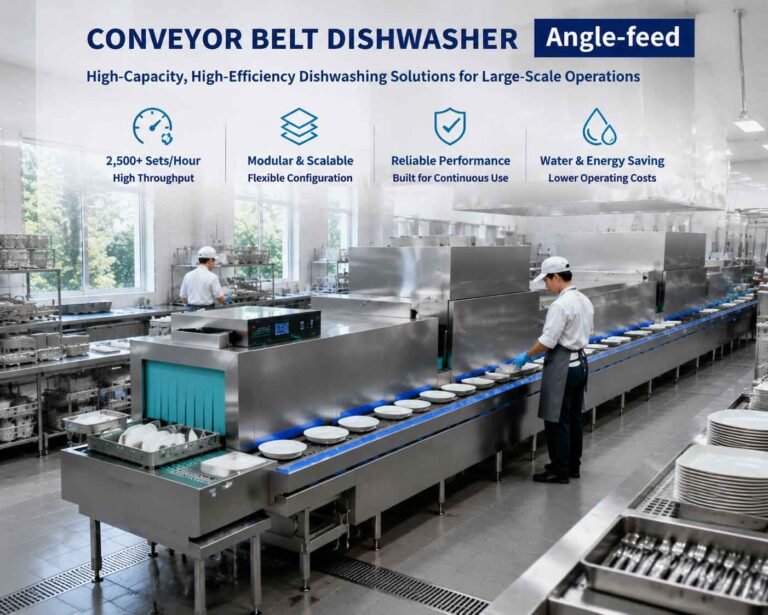
Flight-type conveyor dishwashers are better suited for continuous large-scale cleaning during peak hours.
Food Factories & Central Kitchens
Customized automatic washing systems are often required for industrial-level cleaning efficiency.
Key Factors to Evaluate
Before choosing a machine, consider:
- Daily meal volume
- Peak-hour dishwashing demand
- Kitchen layout and available space
- Water and electricity supply
- Automation requirements
Choosing the right size and system will significantly improve kitchen efficiency.
3. Ignoring Water Quality Issues
Many users later complain about problems like:
- White stains on glassware
- Water spots on dishes
- Scale buildup inside the machine
- Reduced heating efficiency
In most cases, the real issue is poor water quality.
Hard water can quickly create limescale inside the dishwasher, affecting both cleaning performance and machine lifespan.
Recommended Solutions
To improve washing results and protect the machine, it’s recommended to install:
- Water softeners
- Water filtration systems
- Professional commercial detergents
For hotels, cafés, and fine dining restaurants, proper water treatment is especially important to maintain spotless glassware and tableware.
4. Ignoring After-Sales Service and Technical Support
A commercial dishwasher is a high-frequency machine that operates every day.
Without reliable support, even a small issue can disrupt kitchen operations.
Some low-cost suppliers only sell the machine and provide little or no support after delivery.
Common problems include:
- No installation guidance
- No staff training
- Limited spare parts availability
- Slow maintenance response
If the dishwasher stops working during busy hours, the entire kitchen workflow may be affected.
What to Check Before Buying
Always confirm whether the supplier provides:
- Installation support
- Operation training
- Spare parts supply
- Technical assistance
- Overseas service support
- Warranty coverage
Reliable after-sales service is often more valuable than a lower purchase price.
5. Ignoring Kitchen Workflow and Layout Planning
Many businesses only focus on the dishwasher itself and ignore the overall kitchen workflow.
This often leads to:
- Dish pile-ups
- Extra manual labor
- Congested kitchen areas
- Poor separation between dirty and clean zones
A poorly planned workflow can reduce efficiency even if the dishwasher itself performs well.
Smart Kitchen Planning Tips
Before installation, plan:
- Dirty dish collection area
- Washing area
- Sanitizing area
- Clean storage area
- Dish return flow
A properly designed washing workflow can help:
- Reduce labor costs
- Improve cleaning efficiency
- Reduce cross-contamination risks
- Optimize kitchen operations
Final Thoughts
Buying a commercial dishwasher is not simply about choosing a machine — it’s about choosing the right solution for your kitchen.
The ideal commercial dishwasher should offer:
- High cleaning efficiency
- Water and energy savings
- Stable daily performance
- Durable construction
- Reliable after-sales support
- Efficient kitchen integration
By avoiding these 5 common mistakes, you can confidently choose the right commercial dishwasher for your restaurant, hotel, cafeteria, or food factory.
If you are looking for professional commercial dishwasher solutions, feel free to contact us for expert recommendations and customized warewashing systems.