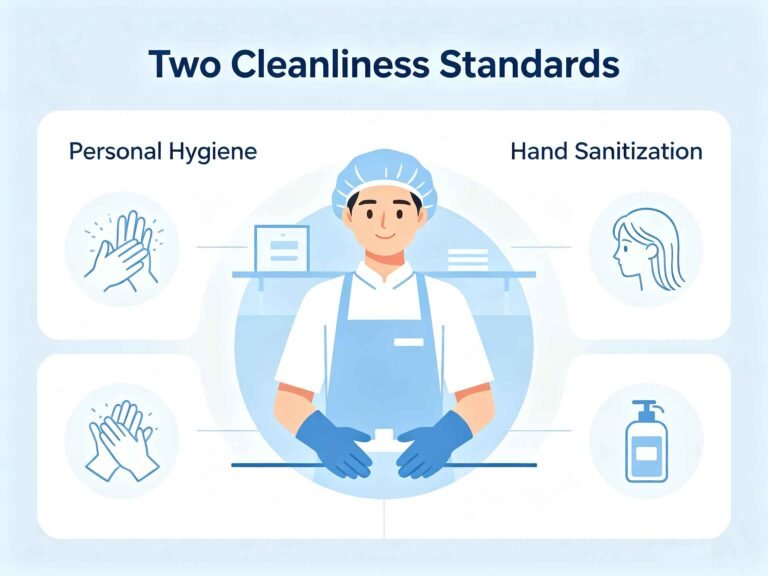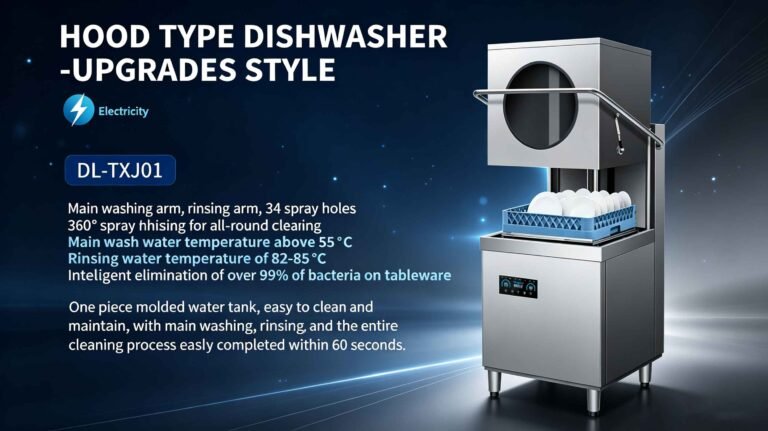
Commercial dishwashers are essential sanitation equipment for restaurants, hotels, school canteens and centralized catering kitchens, delivering high-efficiency, high-temperature cleaning and sanitization for tableware and kitchen utensils. While modern commercial dishwashing equipment ensures reliable cleaning results, strict employee cleanliness standards are critical to prevent secondary contamination, stabilize machine operation and maintain consistent food sanitation. In commercial dishwashing workflows, two key employee cleanliness standards guarantee food safety and standardized operation: professional hand hygiene protocols and standardized personal protective attire & appearance management.
1. Standardized Hand Hygiene for Dishwashing Operations
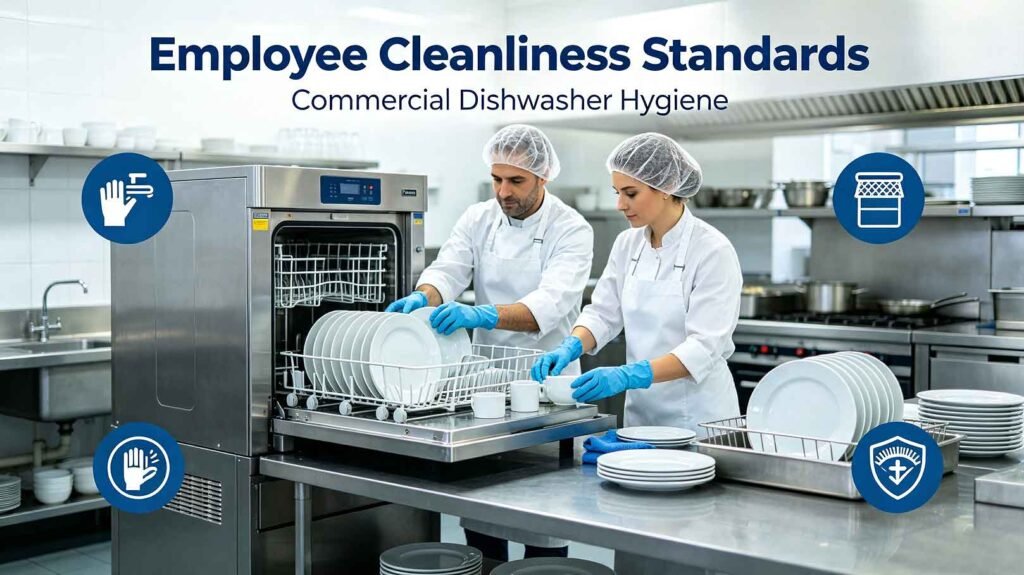
Proper hand hygiene is the top priority for commercial dishwasher operators, as unsanitized hands are the leading cause of cross-contamination and secondary tableware pollution in catering kitchens. Different from casual hand washing, dishwashing staff must follow strict, workflow-based hand cleaning rules to align with professional commercial dishwashing standards.
Operators must clean and sanitize hands at key work nodes: before starting dishwasher operation, after handling food residues and contaminated tableware racks, after touching garbage, after leaving workstations and after using restrooms. Simple water rinsing is not permitted. The standard requires thorough scrubbing of palms, finger gaps, fingertips and wrists with running water and food-grade soap, followed by complete drying and food-safe disinfection. Standardized hand hygiene blocks the transmission of grease, bacteria and impurities to clean tableware, dishwasher racks and spray systems, fully preserving the high-temperature sanitizing performance of commercial dishwashers and complying with global catering food safety norms.
2. Standard Personal Sanitary Appearance and Protective Attire Cleanliness
The second essential employee cleanliness standard covers standardized personal appearance and dedicated work attire management, which eliminates hidden sanitary risks during commercial dishwasher operation. Dishwashing areas feature humid, enclosed working environments with frequent tableware and equipment contact, making strict personal sanitation control vital to avoid food and equipment contamination.
First, operators must wear clean, dedicated dishwashing work uniforms at all times. Stained or non-work clothes are prohibited, as they carry external dust and bacteria that may contaminate tableware or dishwasher interiors. Second, all hair must be fully covered with standard work caps or disposable hairnets to prevent hair falling into tableware or clogging dishwasher spray arms and filter systems. Additionally, staff are forbidden to wear rings, bracelets, other jewelry and nail polish during work. These items easily accumulate dirt and bacteria, and may fall into dishwashing equipment, causing blockages and secondary sanitation issues.
Work uniforms and protective gear require regular cleaning and replacement to prevent grease buildup and bacterial growth. Standardized personal appearance and attire management create a hygienic operating environment for commercial dishwashers, maximize equipment sanitation efficiency, and ensure all cleaned tableware meets official catering hygiene and safety standards.
Conclusion
High-performance commercial dishwashing equipment and standardized employee cleanliness management are core guarantees of kitchen sanitation and food safety. Strict compliance with professional hand hygiene rules and personal protective attire standards effectively eliminates human-induced sanitary hazards, optimizes commercial dishwasher working efficiency and sanitizing effects, and helps catering businesses maintain standardized, safe and high-quality kitchen operation long-term.