Introduction: Why Choosing the Right Commercial Dishwasher Matters
In modern commercial kitchens, dishwashing efficiency directly affects daily operations. Restaurants, hotels, schools, hospitals, and catering businesses need reliable dishwashing solutions that can handle large volumes of plates, bowls, glasses, and cookware while maintaining strict hygiene standards.
A professional commercial dishwasher is more than just a cleaning machine. It helps businesses reduce labor costs, improve kitchen efficiency, save water and energy, and maintain consistent sanitation.
However, choosing the right commercial dishwashing machine can be challenging. Different kitchens have different requirements based on capacity, space, workflow, and budget.
As a professional commercial dishwasher manufacturer from China, DaLin provides reliable warewashing solutions for global restaurants, distributors, kitchen contractors, and project partners.
This guide will help you understand different dishwasher types and how to select the best solution for your business.
1. Why Do Restaurants Need a Commercial Dishwasher?
Traditional manual dishwashing requires significant labor and time. During peak hours, a large number of dirty dishes can quickly accumulate, creating pressure on kitchen staff.
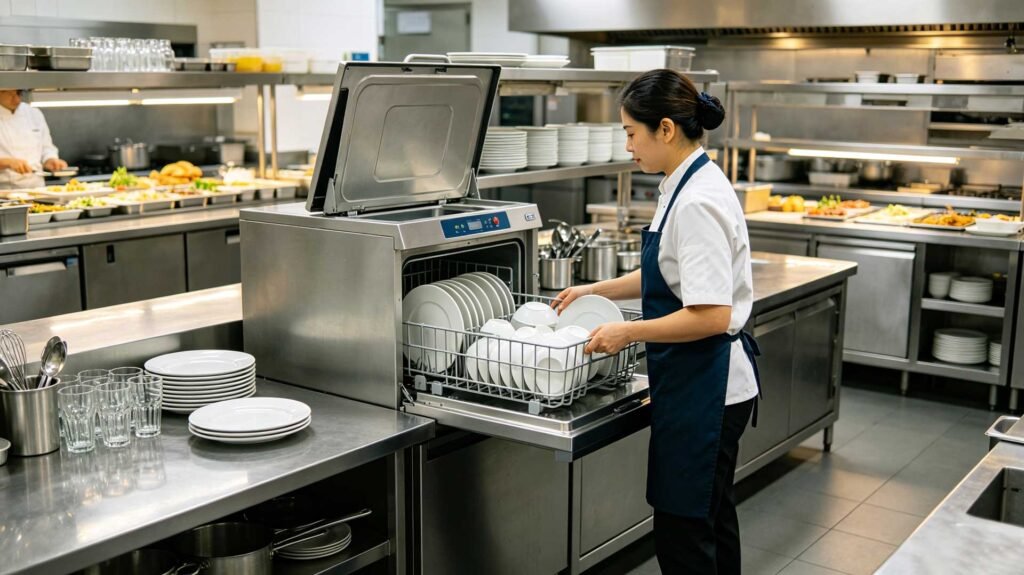
A commercial dishwasher provides several advantages:
1. Higher Cleaning Efficiency
Commercial kitchens need fast turnaround. Professional dishwashers can complete washing cycles within minutes, helping restaurants keep clean tableware available during busy periods.
2. Reduce Labor Costs
Finding and retaining kitchen workers is becoming increasingly difficult worldwide. A commercial dishwasher reduces dependence on manual washing and allows employees to focus on food preparation and customer service.
3. Improve Hygiene Standards
Commercial dishwashers provide controlled washing temperatures, powerful spray pressure, and consistent cleaning performance.
For industries such as:
- Hotels
- Hospitals
- Schools
- Food factories
stable sanitation performance is essential.
4. Save Water and Energy
Modern commercial dishwashing machines are designed with optimized water usage, efficient heating systems, and intelligent washing programs to reduce long-term operating costs.
2. Different Types of Commercial Dishwashers
Choosing the correct dishwasher type depends on your kitchen size, washing volume, and workflow.
1) Undercounter Commercial Dishwasher
An undercounter dishwasher is designed for small and medium-sized businesses with limited kitchen space.
Best Applications:
- Cafés
- Bars
- Small restaurants
- Bakeries
- Coffee shops
Advantages:
✔ Compact design
✔ Easy installation
✔ Suitable for low to medium washing capacity
✔ Efficient for small kitchens
For businesses with limited dishwashing requirements, an undercounter dishwasher provides an affordable and practical solution.
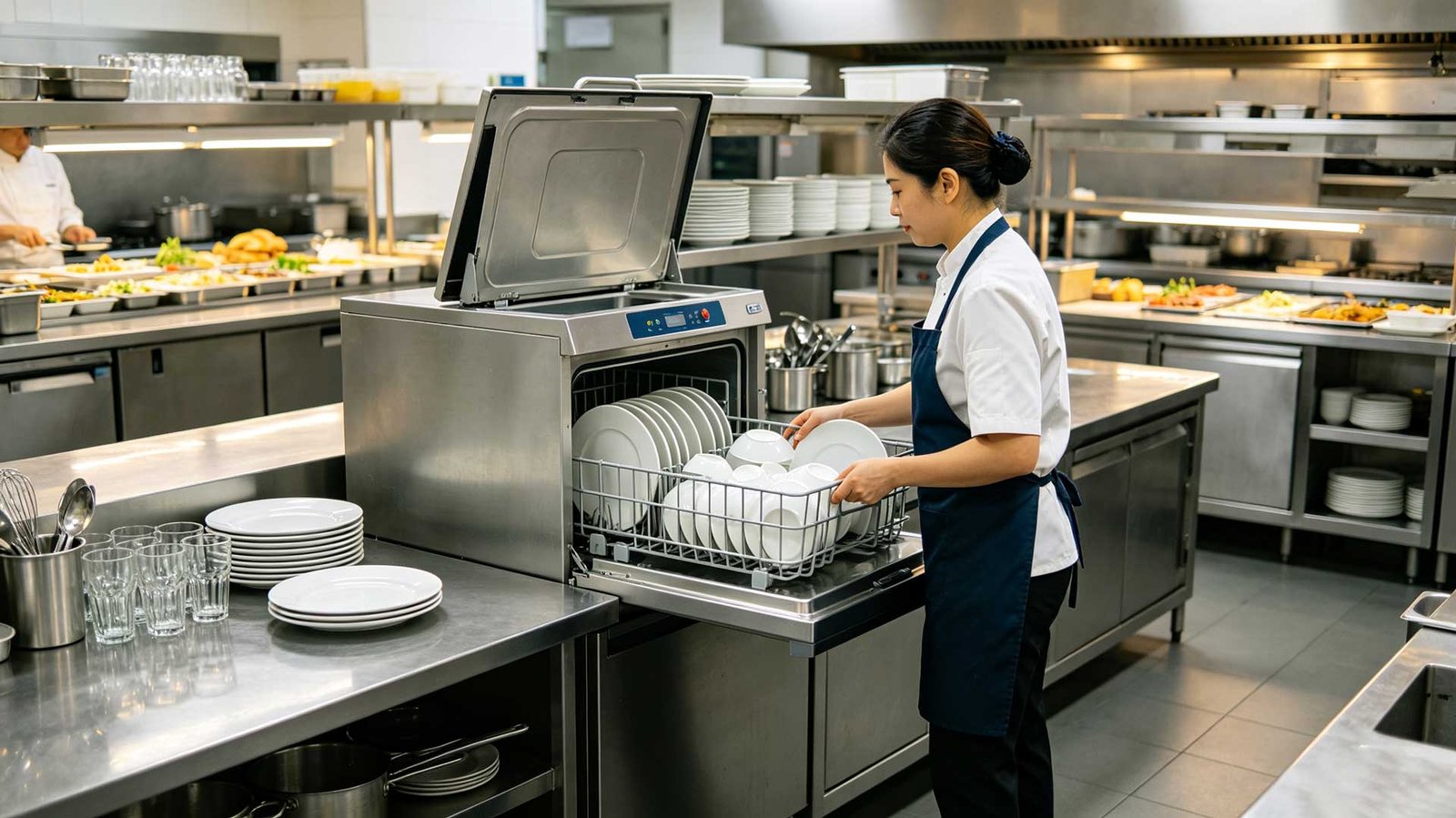
2) Hood Type / Pass Through Dishwasher
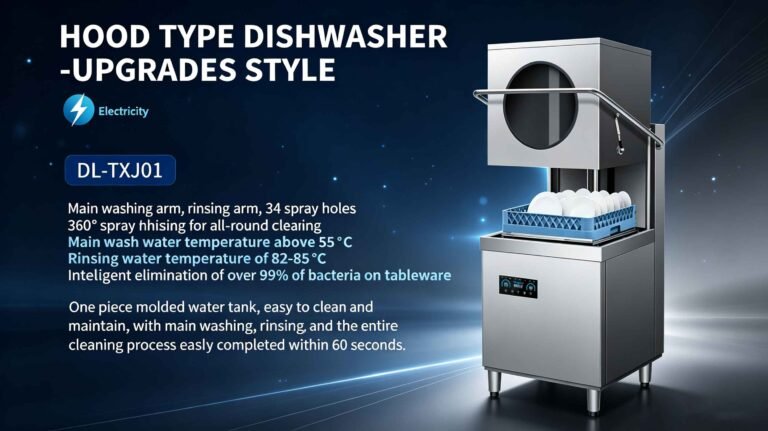
A hood type dishwasher is one of the most popular solutions for professional kitchens.
It is commonly used in:
- Restaurants
- Hotels
- Banquet kitchens
- School cafeterias
- Catering companies
Advantages:
✔ Higher capacity than undercounter models
✔ Easy loading and unloading
✔ Designed for continuous operation
✔ Suitable for medium-sized kitchens
The ergonomic design allows operators to quickly place racks into the machine, improving kitchen workflow.
3) Conveyor Dishwasher
For large-scale foodservice operations, a conveyor dishwasher is the ideal solution.
Common applications include:
- Large hotels
- Central kitchens
- Universities
- Hospitals
- Food processing facilities
- Chain restaurants
Advantages:
✔ High-volume washing capability
✔ Continuous operation
✔ Reduced labor requirements
✔ Suitable for large catering projects
A conveyor dishwasher can process thousands of pieces of tableware per day, making it essential for high-demand environments.
3. Key Factors When Choosing a Commercial Dishwasher
Before purchasing a commercial dishwasher, businesses should evaluate several important factors.
1) Washing Capacity
The first consideration is your daily washing volume.
Ask yourself:
- How many meals are served daily?
- How many dishes need cleaning during peak hours?
- How many racks need to be washed per hour?
Choosing the correct capacity prevents:
- Long waiting times
- Dish shortages
- Kitchen workflow problems
A small restaurant may only require an undercounter dishwasher, while a hotel or central kitchen may need a conveyor dishwasher system.
2) Space and Kitchen Layout
Every kitchen has different installation conditions.
Consider:
- Available floor space
- Dish collection area
- Loading and unloading workflow
- Drainage requirements
- Power supply
A professional supplier should provide a complete solution based on your kitchen layout.
3) Cleaning Performance
A high-quality commercial dishwasher should provide:
Powerful Washing Pressure
Strong water spray removes:
- Food residue
- Oil stains
- Grease
Stable Temperature Control
Maintaining proper washing and rinsing temperatures ensures effective cleaning and sanitation.
Stainless Steel Construction
Commercial kitchens require durable equipment.
High-quality dishwashers usually use:
- SUS304 stainless steel
- Corrosion-resistant components
- Heavy-duty structures
to support long-term operation.
4) Energy and Water Efficiency
Operating costs are important for every restaurant owner.
When selecting a dishwasher, consider:
- Water consumption per cycle
- Heating efficiency
- Insulation performance
- Smart control systems
An energy-efficient commercial dishwasher can significantly reduce monthly operating expenses.
4. High Temperature vs Chemical Sanitizing Dishwasher
Commercial dishwashers generally use two sanitizing methods.
High Temperature Dishwashers
High-temperature models use hot water during the final rinse process.
Advantages:
✔ Strong sanitation performance
✔ Suitable for hotels and healthcare kitchens
✔ Reduced chemical usage
Low Temperature Chemical Sanitizing Dishwashers
These machines use chemical sanitizers.
Advantages:
✔ Lower energy consumption
✔ Flexible installation requirements
✔ Suitable for smaller operations
The best choice depends on local regulations and business requirements.
5. Common Mistakes When Buying a Commercial Dishwasher
Mistake 1: Only Comparing Purchase Price
The cheapest machine is not always the best choice.
Low-cost equipment may cause:
- Higher water consumption
- More maintenance
- Shorter lifespan
- Lower cleaning efficiency
A reliable dishwasher should provide better long-term value.
Mistake 2: Choosing the Wrong Capacity
A machine that is too small creates problems during busy periods.
Always calculate your real washing demand before purchasing.
Mistake 3: Ignoring After-Sales Support
Commercial kitchens cannot afford long downtime.
Choose a supplier that provides:
- Technical support
- Spare parts supply
- Installation guidance
- Training support